Table of Contents
- Future of Accounting 2026 – AI, Automation & The Evolving Role of CPAs
- The Accounting Industry Transformation
- What Is AI Bookkeeping in 2026?
- Limitations of AI in Accounting
- CPA Automation Trends in 2026
- The Hybrid Model – AI + CPA
- Why Businesses Still Need CPAs in 2026
- Industries Most Impacted by AI Accounting
- Risks of Over-Reliance on Automation
- The Future of CPA Advisory Services
- How Shah & Associates CPA Leads in the AI Era
- Will AI Replace Accountants?
- Skills That Define the CPA of the Future
- FAQs
- 2026 Accounting Strategy Checklist
- Final Thoughts: The Future Is Collaborative
- Why Businesses Trust Shah & Associates CPA
Future of Accounting 2026 – AI, Automation & The Evolving Role of CPAs
The accounting industry in 2026 looks very different from even five years ago.
Artificial Intelligence (AI), automation tools, predictive analytics, and real-time financial dashboards are transforming how businesses manage money. Many entrepreneurs now ask:
- Will AI replace accountants?
- Is bookkeeping becoming fully automated?
- Do businesses still need CPAs?
- What is the future of accounting in 2026?
The answer is not that CPAs are disappearing.
The reality is this:
Accounting is evolving and CPAs who adapt are becoming more valuable than ever.
This guide explains:
- The real future of accounting 2026
- How AI bookkeeping works
- What CPA automation trends mean for businesses
- Why human expertise remains critical
- How firms like Shah & Associates CPA are leading this transformation
The Accounting Industry Transformation
What Has Changed Since 2020?
Over the past few years, accounting has shifted from:
Manual entry → Automated data capture
Quarterly reporting → Real-time dashboards
Reactive tax filing → Proactive tax strategy
Local firms → Virtual nationwide services
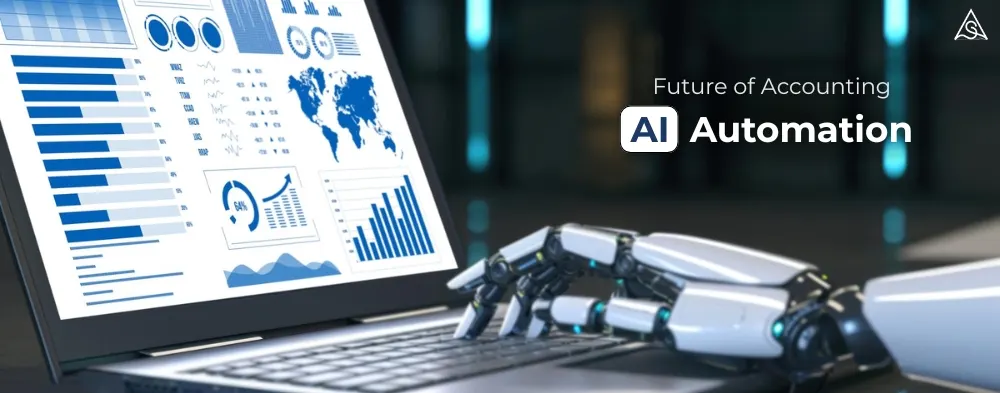
AI bookkeeping systems now:
- Import bank feeds instantly
- Categorize transactions automatically
- Flag anomalies
- Predict cash flow
- Generate financial reports
The technology is impressive.
But technology alone is not a strategy.
What Is AI Bookkeeping in 2026?
How AI Bookkeeping Works
AI bookkeeping uses:
- Machine learning algorithms
- Pattern recognition
- Predictive analytics
- Automation workflows
It can:
- Categorize expenses
- Reconcile bank transactions
- Detect duplicate charges
- Generate P&L reports
- Forecast short-term revenue
For small businesses, this reduces manual work dramatically.
Benefits of AI Bookkeeping
- Faster processing
- Reduced human error
- Lower basic bookkeeping costs
- Real-time financial visibility
For routine tasks, AI is extremely efficient.
Limitations of AI in Accounting
Despite advancements, AI cannot:
- Interpret ambiguous tax law
- Defend audit positions
- Structure business entities
- Design long-term tax strategies
- Represent clients before the IRS
- Apply professional judgment in gray areas
This is where CPAs remain indispensable.
CPA Automation Trends in 2026
Automation Is Changing the CPA Role
The modern CPA in 2026 is no longer:
- Just a tax preparer
- Just a compliance professional
- Just a financial reporter
CPAs now focus on:
- Strategic advisory
- Tax minimization planning
- Multi-state compliance strategy
- Cash flow forecasting
- Risk management
- Business restructuring
Automation handles tasks.
CPAs handle decisions.
Top CPA Automation Trends
- 1. AI-assisted tax research
- 2. Automated audit trails
- 3. Predictive financial modeling
- 4. Cloud-based accounting platforms
- 5. Integrated payroll automation
- 6. Real-time KPI dashboards
Firms using automation outperform traditional firms.
The Hybrid Model – AI + CPA
The future of accounting 2026 is not:
AI replacing CPAs.
It is:
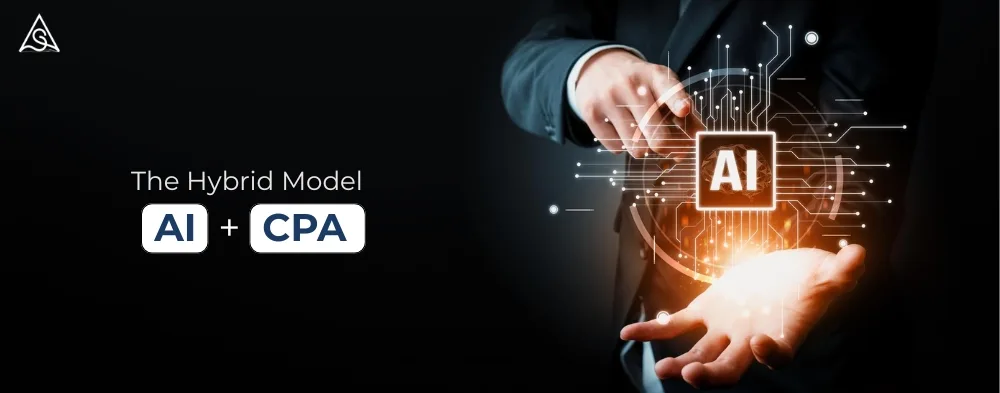
AI empowering CPAs.
Modern accounting firms combine:
- AI-driven efficiency
- Human strategy
- Proactive tax planning
- Data-driven advisory
This hybrid model provides both speed and intelligence.
Why Businesses Still Need CPAs in 2026
Even with AI:
Businesses still face:
- IRS audits
- Multi-state compliance
- Complex entity structures
- Tax law changes
- Strategic financial decisions
AI cannot negotiate with tax authorities.
AI cannot design exit strategies.
AI cannot assess risk tolerance.
Only a CPA can.
Industries Most Impacted by AI Accounting
AI bookkeeping is highly effective for:
- Ecommerce sellers
- Service-based businesses
- Subscription models
- Retail businesses
However, high-complexity industries still require deep CPA oversight:
- Real estate development
- Medical practices
- Construction companies
- Multi-state corporations
- High-income S-Corp owners
The more complex the structure, the greater the CPA value.
Risks of Over-Reliance on Automation
Businesses relying only on automation often:
- Misclassify expenses
- Ignore nexus thresholds
- Overlook payroll compliance
- Underestimate tax liability
- Miss advanced deductions
Small mistakes become expensive over time.
Automation without oversight increases exposure.
The Future of CPA Advisory Services
The CPA of 2026 is:
- A tax strategist
- A financial architect
- A compliance shield
- A growth advisor
Advisory services now include:
- Entity optimization
- Cash flow strategy
- Exit planning
- Multi-state structuring
- Risk mitigation
- Tax projection modeling
Accounting is shifting from reactive to predictive.
How Shah & Associates CPA Leads in the AI Era
At Shah & Associates CPA, we embrace technology but we never replace judgment with automation.
We combine:
- AI bookkeeping efficiency
- Real-time financial dashboards
- Strategic tax planning
- Multi-state compliance expertise
- Proactive advisory services
Our approach ensures:
- Compliance protection
- Tax optimization
- Sustainable growth
Technology supports our expertise. It does not replace it.
Will AI Replace Accountants?
The short answer: No.
AI will replace repetitive tasks.
But AI cannot replace:
- Ethical judgment
- Professional accountability
- Strategic planning
- Risk analysis
- Legal representation
The future of accounting 2026 is evolutionary, not extinction.
Skills That Define the CPA of the Future
The CPA of 2026 must understand:
- AI automation tools
- Data analytics
- Multi-state tax compliance
- Cybersecurity risks
- Regulatory changes
- Cloud accounting systems
Modern CPAs are both financial and technological strategists.
FAQs
What is the future of accounting 2026?
Will AI replace accountants?
What is AI bookkeeping?
Are CPAs still necessary in 2026?
How is automation changing accounting?
Is accounting becoming automated?
2026 Accounting Strategy Checklist
Technology Integration
- Use AI bookkeeping tools
- Integrate payroll automation
- Maintain cloud accounting systems
Strategic Oversight
- Review entity structure annually
- Plan tax projections quarterly
- Monitor multi-state exposure
Compliance Protection
- Maintain documentation
- Conduct audit readiness review
- Work with CPA year-round
Final Thoughts: The Future Is Collaborative
The future of accounting 2026 is not about machines replacing professionals.
It is about:
AI increasing speed
CPAs increasing value
Automation increases efficiency.
Strategy increases profitability.
Businesses that combine both will dominate.
Why Businesses Trust Shah & Associates CPA
Shah & Associates CPA represents the modern accounting firm:
- Technology-driven
- Strategy-focused
- Multi-state compliant
- Growth-oriented
We help businesses thrive in the AI era, not fear it.
If your business is evolving in 2026:
Do not rely solely on automation.
Schedule a strategic consultation with Shah & Associates CPA.
Serving businesses across the USA.
The future belongs to those who plan intelligently.
Disclaimer: The information provided in this blog is for general educational and informational purposes only. It should not be considered tax, legal, or financial advice. Tax laws and regulations may change, and their application can vary based on your individual circumstances. For advice related to your specific situation, please consult with a qualified CPA, tax advisor, or financial professional before making any decisions.